From Observatory to Refuge
Before the mountain became a place to escape, it was a difficult place to keep an uninterrupted record.
A building made for returning outside
Imagine a night when the view has disappeared completely. An observer still has a reason to leave the warm room, check an instrument and record a reading. That repetitive journey between exposure and shelter is a more useful starting point for station-inspired architecture than any romantic picture of a solitary tower.
Historic meteorological buildings were not a single architectural type. Some occupied summit compounds; others sat on lower, more accessible ground. Their layouts responded to scientific needs, available construction methods and the effort of bringing fuel, food and replacement equipment uphill. Today, those constraints offer a vocabulary for remote accommodation, but not a ready-made guarantee of authenticity.
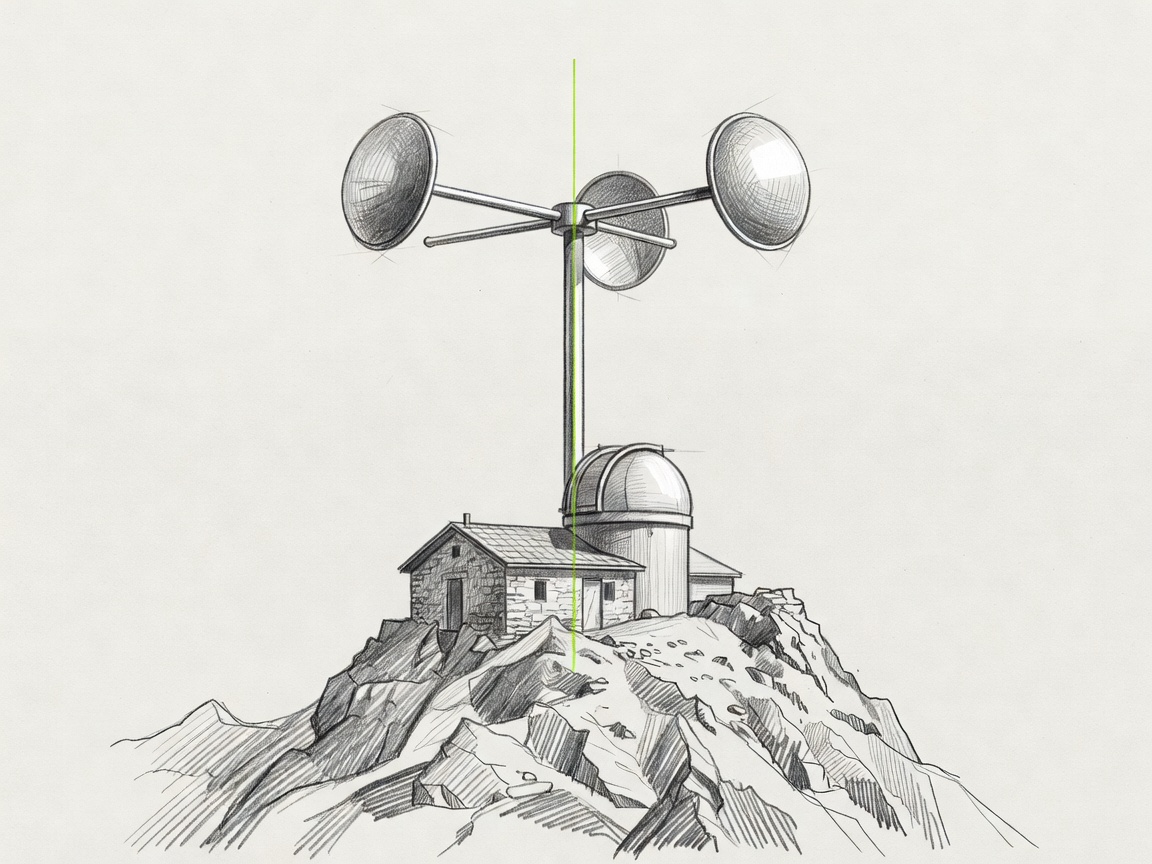
Ben Nevis: the labour behind the view
The summit observatory on Ben Nevis operated from 1883 to 1904. Above Fort William, its observers maintained a demanding programme in conditions that could make even a short outdoor task consequential. The surviving historical record matters because it describes sustained work rather than an exceptional mountaineering moment.
For a traveller, the lesson is domestic. A remote building needs storage, reliable routines and places to recover between periods outside. A room inspired by an observatory should therefore be judged by its entrance, drying arrangements and ability to support a quiet evening as much as its windows. The Ben Nevis example is historical context, not an accommodation recommendation or an invitation to occupy summit ruins.
Sonnblick: continuity, not nostalgia
The Sonnblick Observatory on the Hoher Sonnblick began operating in 1886 and remains associated with high-altitude research. GeoSphere Austria provides institutional context for its scientific work. Here the important distinction is between a working scientific site and the wider network of mountain buildings that may serve climbers or walkers nearby.
Calling every high building a “weather station lodge” erases those different purposes. Research may require controlled access, uninterrupted power and protected instruments. Hospitality requires its own permissions, staffing and safety arrangements. Similar silhouettes do not make those uses interchangeable. Always identify which organisation operates the actual building you hope to visit.
Three claims that should never be confused
Historically a station
A documented previous use. Look for an archive, institutional history or a clear account of the building's original function.
Inspired by a station
A design approach. It may be entirely new architecture, borrowing compact planning or instrument-like detailing.
Available for a stay
A current operational claim. This needs confirmation from the accommodation operator, regardless of heritage.
A wider European lineage
The Zugspitze and Hohenpeißenberg belong to Germany's long history of mountain and elevated meteorological observation, with the Deutscher Wetterdienst providing authoritative information about its observing network. Neither name should be treated as shorthand for a private lodge. They help explain why a location with a broad horizon and distinctive exposure can be scientifically valuable.
In Switzerland, Säntis and the Jungfraujoch demonstrate different relationships between mountain infrastructure and observation. The Sphinx Observatory at Jungfraujoch is a research landmark, not a generic hotel category. MeteoSwiss is a useful source for understanding Swiss weather observations, while the scientific institutions associated with Jungfraujoch describe the research setting more precisely than travel imagery does.
In France, Pic du Midi in the Pyrenees and Mont Aigoual offer further examples of scientific buildings becoming prominent parts of mountain culture. Météo-France explains the meteorological context of Mont Aigoual. These places have distinct histories, management and visitor arrangements; a similarity in atmosphere tells you nothing dependable about present-day overnight access.
What adaptation should preserve
A thoughtful conversion need not preserve discomfort. Better insulation, safer services and accessible circulation can be legitimate improvements. What deserves attention is the building's working logic: an intelligible threshold, spaces proportioned to their tasks, and an honest relationship between the protected interior and exposed exterior.
Ask how the heritage claim is supported. Is the original structure retained? Which elements are later additions? Were instrument platforms, observation windows or service rooms adapted, and how is that explained? A clear answer is more persuasive than a collection of antique-looking gauges. Decorative barometers are not evidence of meteorological provenance.
Finally, leave room for a completely contemporary lodge to be good on its own terms. A compact building with a sensible entrance, modest energy demand and excellent weather information may embody station thinking without possessing a historic wall. The useful inheritance is an attitude of attention, not a promise that every visitor can sleep inside a famous observatory.
Institutional starting points
- Met Office — British weather and historical context.
- Sonnblick Observatory — the observatory's scientific setting.
- GeoSphere Austria — Austria's meteorological and geoscientific institution.
- Deutscher Wetterdienst — German observations and services.
- MeteoSwiss and Météo-France — national meteorological information.
These are institutional reference routes, not evidence of lodging availability. Check individual visitor rules directly.
Next: rooms built for exposure